
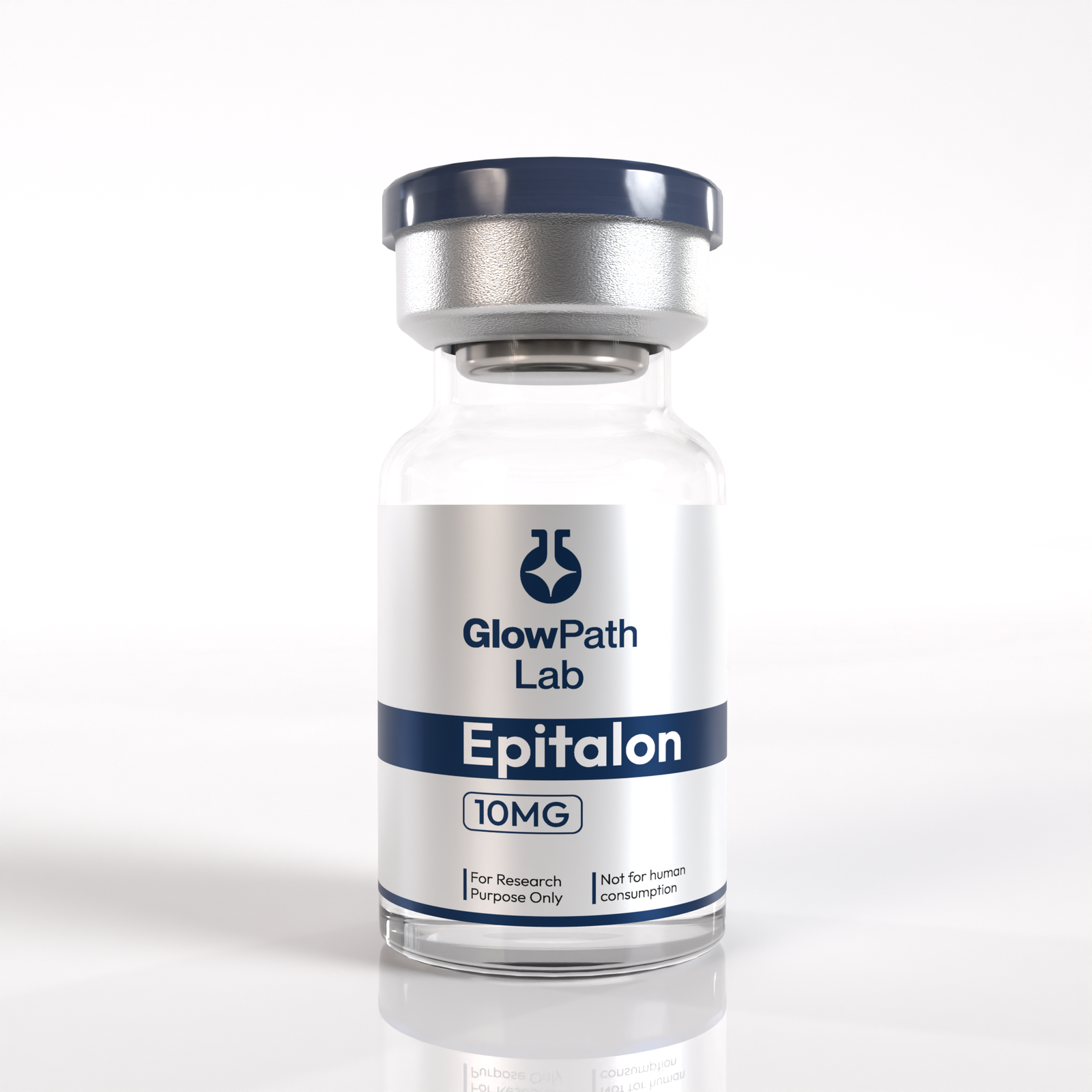
Epitalon
Epitalon is a synthetic peptide derived from the sequence of the telomerase-activating peptide (TAP) found in certain marine organisms, including the Mediterranean mussel Mytilus galloprovincialis. This peptide is categorized under research-use-only (RUO) compounds and is primarily investigated in preclinical and basic science research settings. Its mechanisms of action and potential effects are still under active study within academic and institutional research environments.
Research Context
Research into Epitalon has primarily focused on its potential role in modulating cellular aging processes, particularly through interactions with the telomere maintenance pathway. Telomeres are repetitive nucleotide sequences at the ends of chromosomes that shorten with each cell division, a process linked to cellular aging. Some studies suggest that peptides like Epitalon may influence telomerase activity, thereby offering a theoretical framework for exploring interventions targeting age-related decline.
Research Overview
Epitalon was first identified in the context of aging research as a candidate for studying biological aging mechanisms. Initial studies in animal models (including rodents) have explored its effects on oxidative stress, mitochondrial function, and longevity-related pathways. While the peptide has not been extensively tested in human trials, its synthetic nature allows for precise control of dosing and administration in experimental settings. Investigations often employ various cellular assays, tissue culture models, and whole-organism studies to assess biological activity.
Key Research Focus Areas
- Telomere Biology: Exploration of Epitalon’s potential to modulate telomerase activity or telomere maintenance mechanisms, which may impact cellular longevity.
- Antioxidant and Anti-Aging Effects: Examination of its role in reducing oxidative damage and supporting mitochondrial integrity in aged or stress-exposed tissues.
- Longevity Signaling Pathways: Investigation of how Epitalon may interact with pathways involved in stress responses, including the mitochondrial unfolded protein response (mtUPR) and other pro-longevity factors.
- Preclinical Safety Assessment: Evaluation of toxicity, pharmacokinetics, and dose-dependent effects in animal models to inform future research directions.
- Comparative Peptide Mechanisms: Comparative analysis of Epitalon’s effects relative to other synthetic peptides (e.g., senolytics, telomerase activators) to refine its potential applications.
This peptide is intended for use exclusively in research environments and is not approved for therapeutic, diagnostic, or cosmetic applications. Its study should adhere to the ethical standards and regulatory guidelines applicable to basic science research involving chemical substances.
For research use only. Not for human or animal consumption.
| Size | 10MG, 50MG |
|---|
Reviews
There are no reviews yet.