
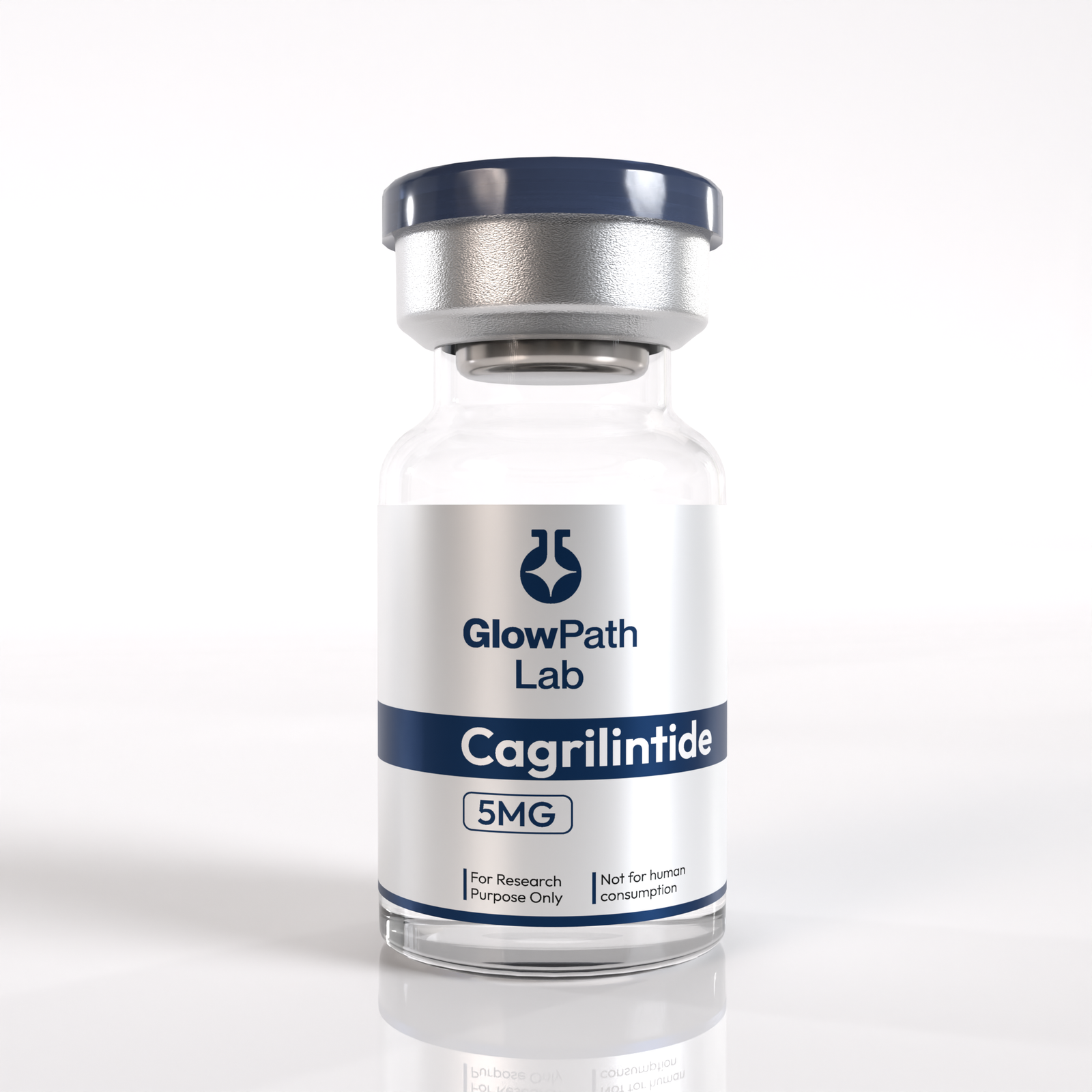
Cagrilintide
Cagrilintide is a novel peptide under investigation for its potential role in modulating gastrointestinal and metabolic functions within a research setting. As a research-use-only compound, it is intended for academic and institutional studies aimed at exploring its pharmacological properties and mechanisms of action in controlled experimental conditions. This description provides an overview of the compound’s background, research context, and relevant scientific focus areas.
Research Context
Cagrilintide is a synthetic peptide derived from the glucagon-like peptide-2 (GLP-2) and glucagon-like peptide-1 (GLP-1) families, known for their roles in gastrointestinal physiology, appetite regulation, and metabolic homeostasis. Research involving such compounds often examines their potential effects on gastrointestinal motility, nutrient absorption, and systemic metabolic processes. This peptide may be investigated for its potential to enhance gastrointestinal function, influence satiety signals, or explore novel therapeutic mechanisms in preclinical studies.
Research Overview
The primary focus of research involving cagrilintide has centered on its ability to act as a potent agonist for glucagon-like peptide-2 (GLP-2) receptors, as well as its potential modulation of other gastrointestinal peptides. Studies may investigate its effects on:
- Gastrointestinal motility and intestinal barrier function
- Metabolic responses, including glucose regulation and energy homeostasis
- Neuroendocrine signaling in the gut-brain axis
- Potential applications in gastrointestinal disorders and metabolic diseases
While preclinical data are limited, cagrilintide’s structure and receptor affinity suggest it may offer unique insights into gastrointestinal pharmacology and metabolic research.
Key Research Focus Areas
- GLP-2 Receptor Agonism:
Cagrilintide is structurally designed to mimic the effects of GLP-2, a peptide known for its role in maintaining intestinal mucosal integrity, increasing nutrient absorption, and promoting gastrointestinal repair. Research may explore its efficacy compared to established GLP-2 analogs in preclinical models. - Gastrointestinal Motility and Satiety:
Given its potential interaction with GLP-1 pathways, cagrilintide may be investigated for its effects on appetite regulation, gastric emptying, and overall gastrointestinal transit time in controlled experimental conditions. - Metabolic Effects:
Preclinical studies could evaluate its influence on glucose metabolism, insulin sensitivity, and potential anti-obesity mechanisms through modulation of gut-derived hormones and endocrine responses. - Safety and Toxicology Profiling:
Research may include comprehensive assessments of pharmacokinetic properties, dosing profiles, and potential side effects in animal models to establish baseline safety parameters for future translational studies.
This information is intended solely for academic and research purposes. Users must adhere to all institutional guidelines, ethical standards, and regulatory requirements applicable to their research activities.
Important Disclaimer
This product is for research use only. Not for human or animal consumption. The information provided herein is for educational and informational purposes only and does not constitute medical, therapeutic, or diagnostic advice. The handling, storage, and use of cagrilintide must comply with all applicable laws, regulations, and institutional policies. Users are responsible for ensuring compliance with all relevant ethical and safety standards in their research setting.
| Size | 10MG, 5MG |
|---|
Reviews
There are no reviews yet.