
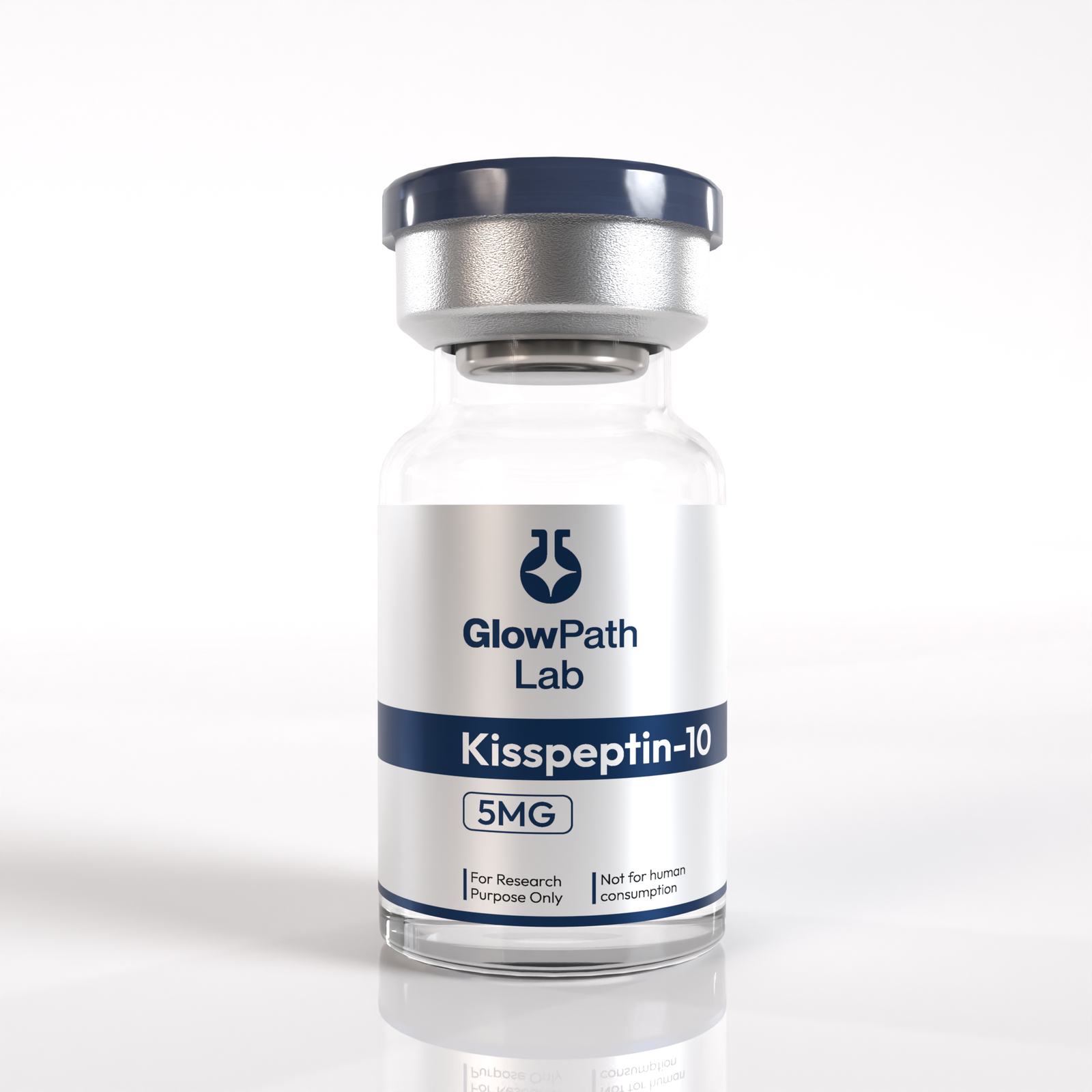
Kisspeptin-10
Kisspeptin-10 is a synthetic decapeptide derived from the endogenous kisspeptin hormone, a key regulator of reproductive function in mammals. This peptide plays a critical role in the hypothalamic-pituitary-gonadal (HPG) axis, influencing pulsatile GnRH (gonadotropin-releasing hormone) secretion, which in turn governs gonadal hormone production and reproductive cycles. Due to its central role in neuroendocrine regulation, kisspeptin-10 has been extensively studied in preclinical research investigating mechanisms of fertility, aging, and endocrine disorders.
Research Context
Kisspeptin-10 was first identified as a potent activator of GnRH neurons in the arcuate nucleus of the hypothalamus, mediating the transition from pubertal maturation to reproductive competence. Preclinical studies in rodent models have demonstrated its ability to restore reproductive function in conditions such as premature ovarian insufficiency, androgen deficiency, or neuroendocrine disruptions. Research has also explored kisspeptin-10’s potential as a tool to dissect mechanisms of hormonal feedback, particularly in studies of kisspeptin receptor (Kiss1r) signaling pathways.
Research Overview
Kisspeptin-10 has emerged as a pivotal peptide in translational neuroendocrine research, serving as both a pharmacological probe and a therapeutic candidate in controlled experimental settings. Its synthetic form allows for precise manipulation in vivo and in vitro studies, enabling investigations into GnRH pulsatility, gonadotropin secretion dynamics, and reproductive aging. Additionally, kisspeptin-10 has been utilized to model sex steroid feedback regulation, contributing to our understanding of endocrine homeostasis and potential therapeutic interventions for hypogonadism or gonadal dysfunction.
Key Research Focus Areas
- GnRH Neuron Activation: Investigating kisspeptin-10’s role in modulating pulsatile GnRH secretion and its implications for reproductive physiology.
- Reproductive Aging and Infertility: Preclinical studies examining kisspeptin-10’s effects on ovarian reserve depletion and reproductive decline in aging models.
- Endocrine Feedback Mechanisms: Assessing kisspeptin-10-mediated modulation of sex steroid feedback loops in gonadotropin regulation.
- Neuroendocrine Disorders: Exploring potential applications in preclinical models of premature menopause, hypogonadism, or gonadotropin deficiencies.
- Peptide Receptor Signaling: Characterizing kisspeptin-10’s interaction with Kiss1r and downstream signaling cascades in hypothalamic neurons.
For research use only. Not for human or animal consumption.
| Size | 10MG, 5MG |
|---|
Reviews
There are no reviews yet.