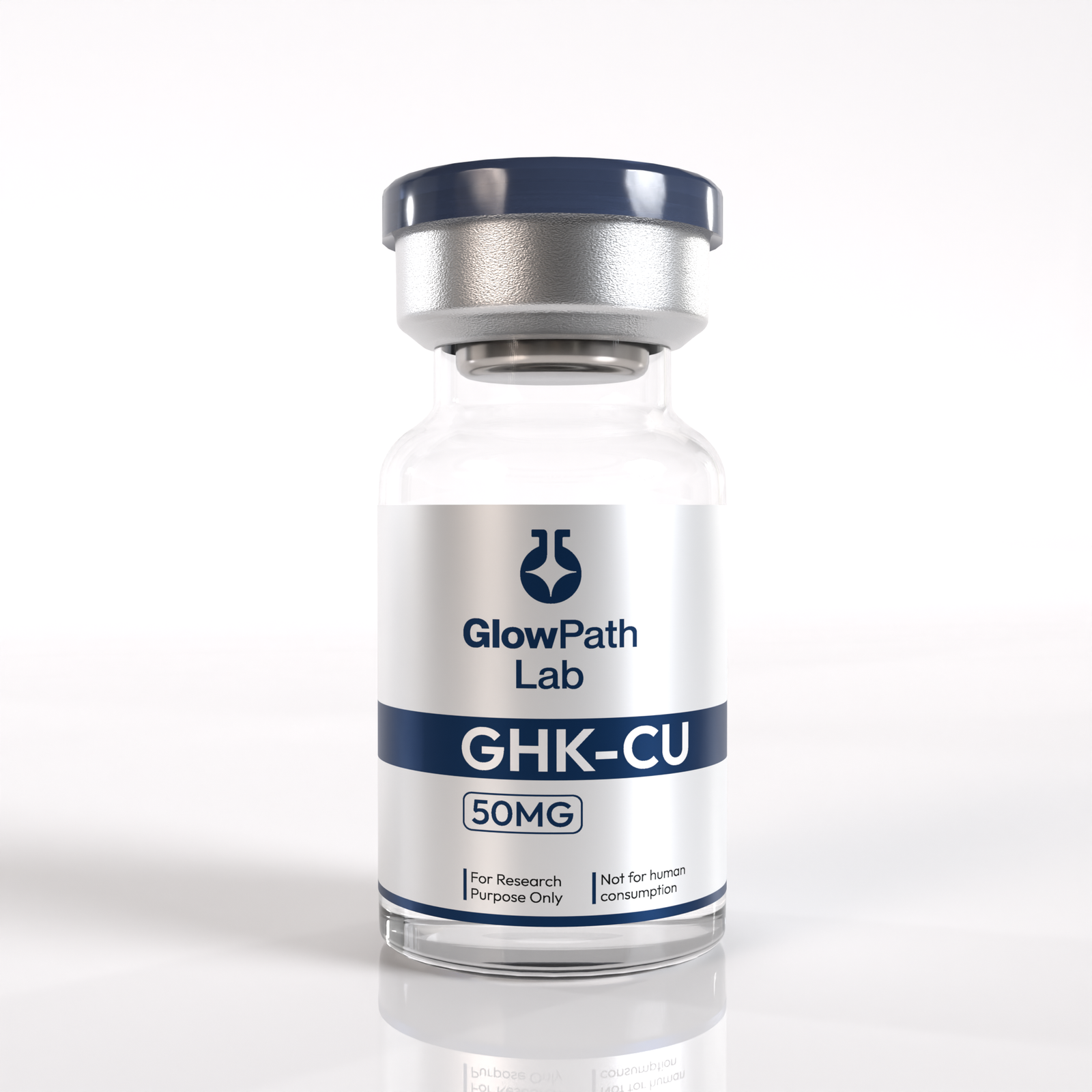
GHK-CU
GHK-CU is a synthetic peptide derived from human growth hormone (hGH) and copper (Cu), specifically the pentapeptide sequence Gly-His-Lys-Asp-Tyr (GHKDY) conjugated with a copper ion. This compound is utilized in academic and industrial research settings to study cellular interactions, protein modifications, and potential applications in biochemical studies. Due to its unique properties, GHK-CU has been explored for its effects on cellular responses and structural analyses.
Research Context
GHK-CU has emerged as an important research tool due to its ability to facilitate the binding of proteins to copper ions, thereby influencing their structural and functional properties. In biochemical research, it is often used to investigate the role of copper in protein folding, enzymatic activity, and cellular signaling pathways. Its use in studies involving peptide-protein interactions has made it valuable for researchers exploring fundamental molecular mechanisms.
Research Overview
GHK-CU was initially isolated from a naturally occurring hGH-derived peptide. Synthetic variants, such as GHK-CU, are often employed in laboratory settings to study copper-dependent biochemical processes. Research has shown potential applications in the investigation of protein conformational changes, oxidative stress responses, and the role of copper in various biological systems. This peptide is frequently used in biochemical assays, protein purification, and structural biology experiments.
Key Research Focus Areas
- Protein-Copper Interactions: GHK-CU plays a critical role in studying how copper ions influence protein structure and function, particularly in contexts requiring copper-dependent binding or catalysis.
- Biochemical Assays: Researchers utilize GHK-CU to investigate peptide-protein interactions, cellular uptake mechanisms, and the dynamics of protein modifications in vitro.
- Structural Biology: The peptide is employed in experiments aimed at elucidating protein folding, misfolding, and conformational changes under copper-mediated conditions.
- Cellular Signaling: GHK-CU contributes to studies examining copper signaling pathways and its impact on intracellular processes, including protein trafficking and enzymatic regulation.
Important Disclaimer
GHK-CU is intended solely for research purposes and is not approved for human or animal consumption. The information provided herein is for academic and laboratory use only. Users are responsible for adhering to all applicable regulatory requirements and guidelines governing research materials. Any experimentation involving GHK-CU must comply with institutional policies, ethical standards, and local or national laws. For research use only. Not for human or animal consumption.
| Size | 100MG, 50MG |
|---|
Reviews
There are no reviews yet.